


eCommerce Personalization in 2026: Why Generic Experiences Are Quietly Killing Your Revenue
Read summarized version with
According to research published by Accenture, nearly 91% of customers say they’re more likely to shop from brands that remember and recognize them, and provide relevant offers.
You've probably seen that stat or read the research. But what most discussions overlook is the obvious implication. If 91% of shoppers today prefer relevant experiences, then every store that doesn't deliver one is losing customers to those that do. This isn't a nice-to-have problem. It's a revenue problem.
And yet most Shopify stores still show the same homepage, product grid, and "featured this week" section to every visitor. Whether someone has bought from you four times or is landing on your eCommerce store for the first time, organically or from a paid ad, they see the same thing.
That's not a neutral experience. That's an expensive choice.
In this blog, let’s understand the importance of personalization, especially in 2026 and the age of artificial intelligence (AI), and dive deep into a 30-day test all eCommerce brands must run.
What Personalization Actually Means, Because Most Brands Get This Wrong
Let's be honest about what passes for personalization in most eCommerce contexts.
A "Happy Birthday, here's 10% off" email is not personalization. A first-name merge field in a subject line is not personalization. A "You've earned Gold status" banner is not a form of personalization.
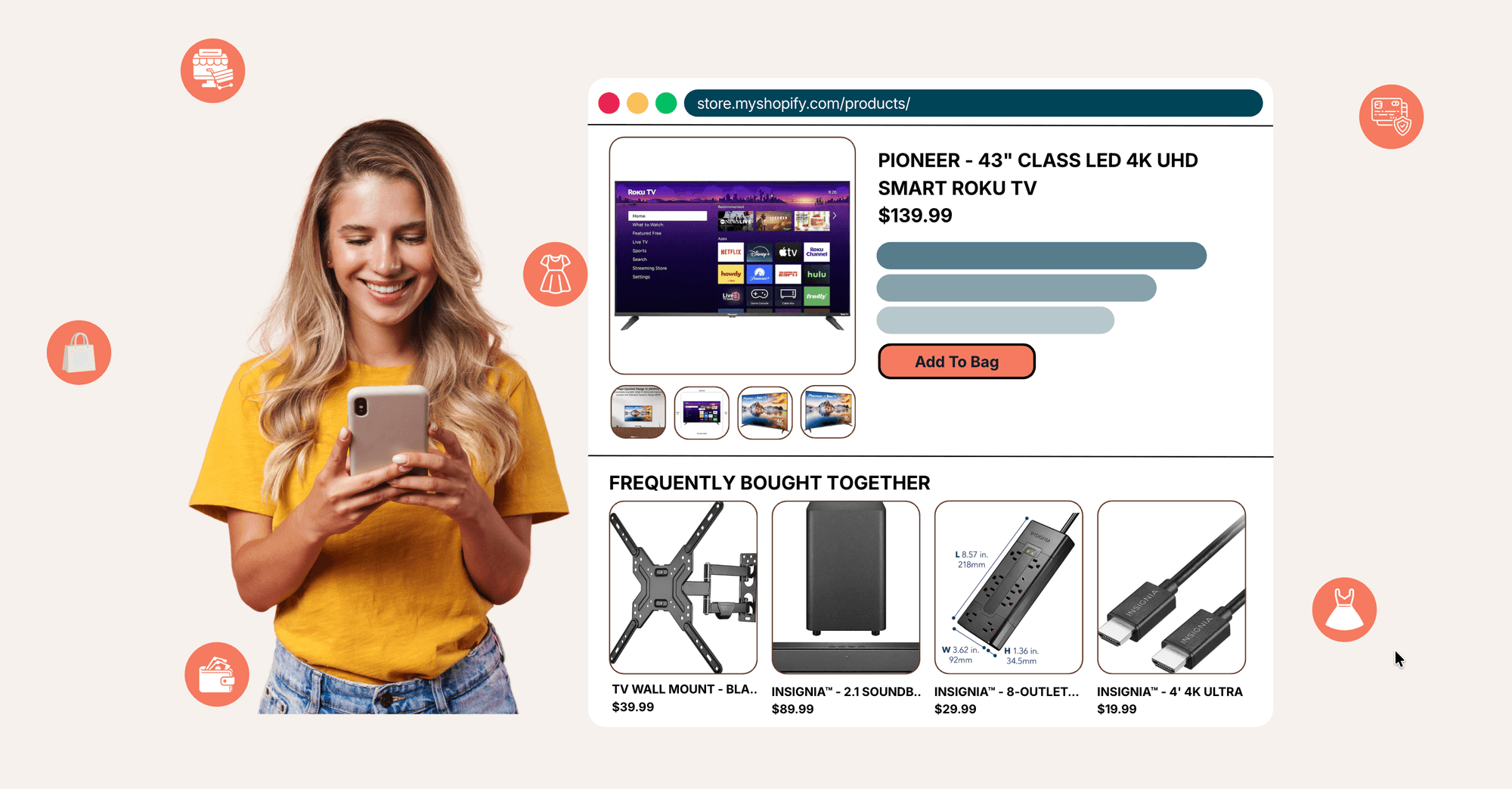
Real personalization changes what a customer sees in your store. Which products appear first, which cross-sells get surfaced on the product page, what the cart suggests, and what shows up when they visit again next week is what’s called personalization.
Personalization is not just a messaging layer placed on top of the same generic store. It's the store itself adapting to who's in it.
There's a spectrum here that's worth mapping clearly.
- Rules-based personalization is the most primitive: "If device is mobile, show this banner." Useful but coarse.
- Segment-based is a step up: "If the customer has bought twice, show loyalty module." But a segment of 50,000 people isn't personalized.
- AI-powered behavioral personalization is a different category altogether: the system reads each individual's real-time behavior, matches it against historical patterns in your actual customer data, and dynamically adjusts the experience, without a human writing a rule for every scenario.
The gap in outcomes between the third approach and the first two isn't marginal. It's structural.

The Data AI Uses That Rules Can't Touch
Here's what makes AI personalization categorically different from its predecessors. It reads signals that no human team could act on manually at scale.
In-session behavioral signals. What has this visitor clicked on in the last four minutes? How long did they spend on that product description? Did they zoom into the image? Did they add something to the cart and then remove it? Every one of those actions is data, and AI is acting on all of them simultaneously, in real time, while the session is still live.
Purchase history. A returning customer who always buys in the $80–$120 range is a different target than someone whose one previous order was a $30 clearance item. Price sensitivity is encoded in the transaction record. AI reads it and calibrates what to show.
Product affinity clusters. These are patterns the AI discovers from your transaction history.
- Which products tend to get bought together
- Which categories do customers explore after buying from another
- Which combinations correlate with repeat purchase
Most eCommerce brands fail to map these by hand at catalog scale. AI finds them automatically and applies them continuously.
Traffic source context. A visitor from a targeted email about a specific product is in a different headspace than one arriving from a generic Google search. Glood.AI factors the entry point into what gets surfaced first, even before behavioral data has accumulated.
What all of this adds up to is a store that doesn't just know its catalog. It knows each customer. Critically, it knows them using only first-party data generated by your own store and not any third-party data vendors.
This means no cookie dependencies. Just your sessions, your purchases, your behavioral signals, turned into revenue.
Where Personalization Moves Revenue - The Five Spots That Matter Most
Theoretically, personalization is possible everywhere. But there are five specific places on a Shopify store where it changes commercial outcomes in ways you can measure.
1. The homepage
For new visitors, AI ranks products by predicted relevance based on session context and traffic source. For returning customers, it can go further and feature products from categories they've bought in before, show new arrivals in their demonstrated taste profile, and re-rank the entire product grid by predicted purchase probability rather than what the merchandising team chose to feature last week.
2. Category and collection pages
Most merchants sort these by date uploaded or by some manual priority. AI re-ranks the entire grid per visitor. For instant, a customer who consistently buys minimalist, neutral colored apparels will see different products ranked first than one who buys bold prints.
While the grid looks the same to each one of them, the catalogue order changes, the products they see first are different, and this is what defines their clicks.
3. Product detail pages
This is where most personalization investment goes or must go, and for good reason. It’s a high-intent territory and must be utilized in the most optimized manner. But most "You Might Also Like," or “Recommendations” sections are just popularity widgets. The same six products are shown to everyone, every time.
With artificial intelligence, the game changes completely. AI makes the section genuinely dynamic. It gives you the leverage of showing different cross-sell recommendations for different visitors based on what they’ve done in this session so far, and even before it.
4. The cart
One well-chosen AI-selected add-on at the cart stage converts at 8-14%. The keyword there is "one." A list of random recommendations at the cart stage creates decision fatigue and can hurt overall conversion. Artificial intelligence is doing relevant work here, and not just recommendation work.
5. The post-purchase confirmation page
This is the highest-converting real estate on your entire store, and also the most abandoned one. Artificial intelligence can simply fire a single, hyper-relevant "Add to Order" prompt after the purchase is confirmed and tap into the psychology of a buyer who’s already in the “yes” mode. Since the friction of placing a fresh order and going through the payment process get eliminated, these matched offers convert at a staggering 15-22%.
The Business Math on Personalization
Let’s move away from percentages for a second and look at what personalization actually means for a real eCommerce store.
Imagine your online store is generating $1.5M in annual revenue, with a 2.8% conversion rate and an average order value (AOV) of $72.
Now, with smarter, AI-driven product recommendations, you’ll witness:
- A 25% conversion uplift through better personalized product recommendations, talking conversion from 2.8% to at least 3.5%.
- A 20% AOV uplift from AI-powered upsells and cross-sells, taking average order value from $72 to $86.
While everything else remains the same, including traffic, acquisition spend, and products, the resulting outcome will change. You can witness an increase in annual revenue of about 2.25 M. Meaning, an additional pour of $750,000 in your business, coming entirely from AI personalization.
Besides this, the customer acquisition cost (CAC) implication is equally important. When AOV increases, conversion and revenue per paid click also goes up. This means you can either:
- Bid more aggressively on paid ads to scale your online store faster
- Keep ad spend the same and improve business profitability.
This is the real business use case of AI personalization.

Why 2026 Is the Inflection Point
Three things have changed over the past two years that make this moment different from every previous conversation about personalization.
1. Third-party cookies are gone.
The behavioral targeting infrastructure that powered most performance marketing for a decade has been deprecated. What's left is first-party data, especially the behavioral signals your own store generates.
Brands that have been collecting and acting on this data are sitting on an increasingly valuable asset. However, brands that haven't are discovering that their audience targeting is getting harder and more expensive with every passing quarter.
2. AI personalization infrastructure is now genuinely accessible to non-enterprise brands.
What used to require a data science team, a custom machine learning (ML) pipeline, and a six-figure technology investment is now a Shopify-native integration that installs within a few hours.
The technology gap between what a $50M brand could do and what a $2M brand could do has largely closed. In 2026, the version of "we're not big enough for this yet" doesn’t hold up anymore.
3. Customer expectations have moved, permanently
Shoppers who use Amazon, Sephora, or ASOS have been trained to expect a store that knows them well. When they land on an independent D2C brand's store, and it shows the same generic experience as everyone else, they feel the difference, even if they’re unable to articulate exactly why.
Bounce rates are higher, session depths have reduced, and conversion rate takes a hit. Generic doesn't just feel neutral anymore. It feels like a step backwards.
The 30-Day Test Worth Running
Here's the simplest argument for just trying this.
Set your business baseline, including your current AOV, conversion rate, and 30-day repeat purchase rate for recent cohorts. Now install an AI personalization layer or a tool like Glood.ai. Let it train for two to three weeks for the model to feed on your business data to sharpen its recommendations. Then compare the results with your previous, non-AI personalized metrics.
If your AOV needle hasn’t moved at all after 30 days, check your implementation. A well-configured AI personalization setup, such as Glood.ai, on your online store with meaningful traffic will show early signals within two to three weeks itself, giving your business the edge it needs, especially in 2026 when competition is at its peak.
Most eCommerce brands that run this experiment have seen exceptional results. GAP, a leading fashion brand, is one such example.
GAP implemented AI-powered product recommendations powered by Glood.AI, showing its customers items based on their recent browsing history and product similarities. The personalization improved the brand’s engagement, driving nearly 50% uplift in click-through rate, increasing time spent by 20%, and improving ROI by 40X.
Generic Isn't Safe Anymore
The comfortable middle ground or the “no-effort” effort of showing everyone the same store isn't actually safe. It is actually a revenue drainer.
Every session where a customer wasn't shown the right products at the right moment is potential revenue lost. Every returning customer who was shown the same homepage as a first-timer is a retention signal that wasn't acted on. These aren't dramatic failures. They're quite heavy ones, and they add up.
Glood.AI bridges this gap for eCommerce brands. It powers real-time behavioral recommendations, no-code integration, and a model that gets sharper with every transaction. The infrastructure is there. The ROI is measurable. The question is when you start using it.

Sign Up For Our Free Weekly Newsletter
Get the latest e-commerce insights, tips, and strategies delivered straight to your inbox.
You May Also Love to Read
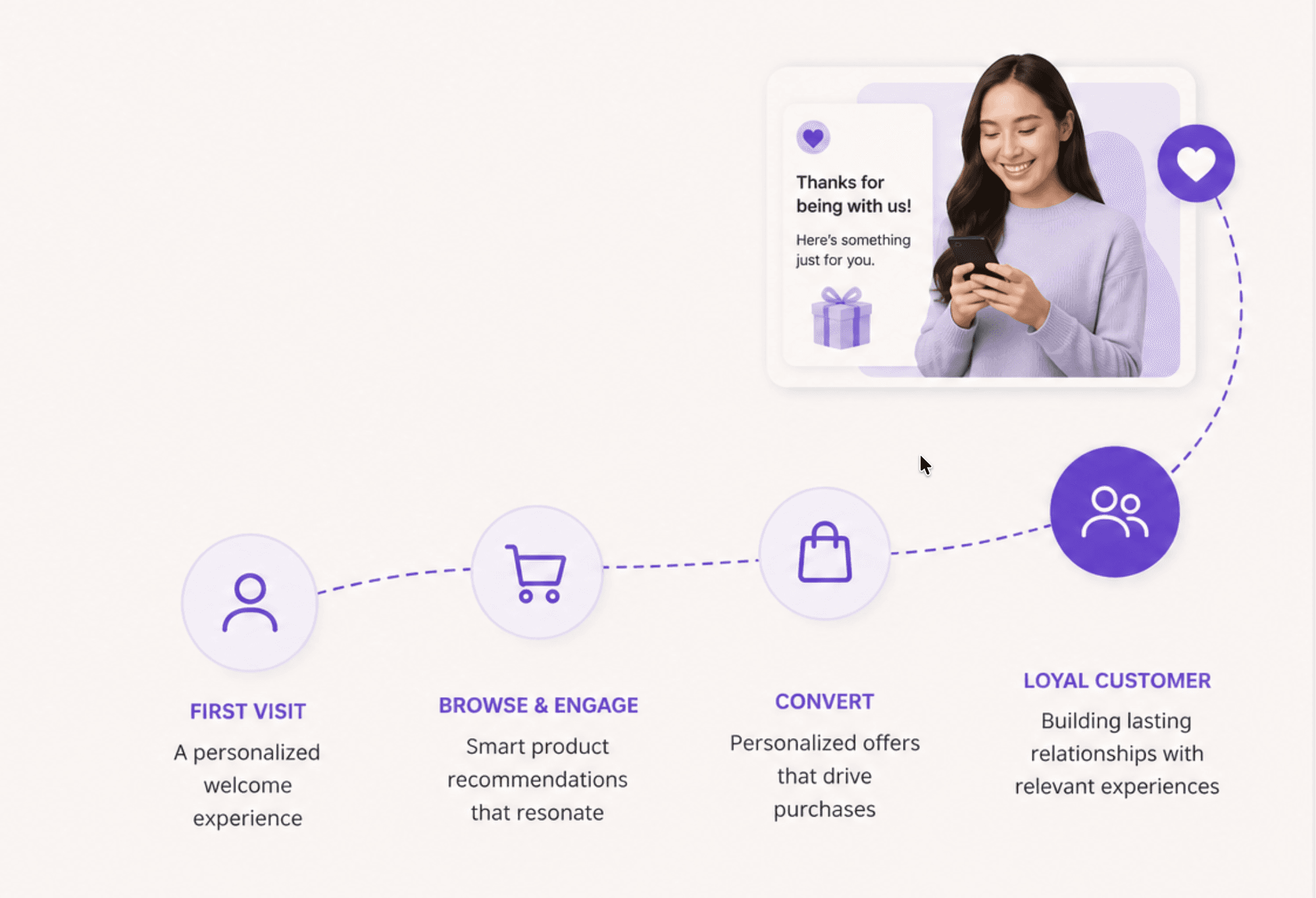
From First Visit to Loyal Customer: How Glood.AI Personalizes the Entire D2C Journey
Most personalization tools optimize one moment. Glood.AI personalizes the entire customer journey, from the first click through the fifth purchase and beyond.
Apr 30, 2026
7 E-Commerce Personalization Trends That Will Undoubtedly Change the Industry in 2023
E-commerce personalization plays a significant role in shaping the future of online shopping. Companies that invest in personalization are likely to see increased customer engagement, loyalty, and sales. Personalization will also drive increased competition in the industry, as companies strive to of
Jan 31, 2023
10 Types of Personalized Product Recommendations for Shopify in 2023
Most customers look forward to a personalized shopping experience on Shopify. Here are some powerful techniques that change the way businesses can interact with their customers and strengthens the relationship.
Jan 23, 2023