


5 Ways to Use OpenClaw for D2C Marketing
Read summarized version with
We work every day with Shopify brands, trying to do more with less. The conversations are almost always the same. A founder with a great product, a team of three or four, and a growing list of channels: TikTok, Instagram, email, SMS, Reddit, and a dozen more. Each one needs a different format, a different hook, a different tone. The team can usually handle any one of them well. Just not all of them at once.
The global D2C market reached $163 billion in 2024 and is projected to reach $595 billion by 2033. The opportunity is real. But so is the pressure. Over 60% of online purchases happen on Amazon, customer acquisition costs have been climbing since Apple’s App Tracking Transparency upended paid social in 2021, and Gen Z shops with less brand loyalty than any generation before it. Slow operations don’t survive that environment.
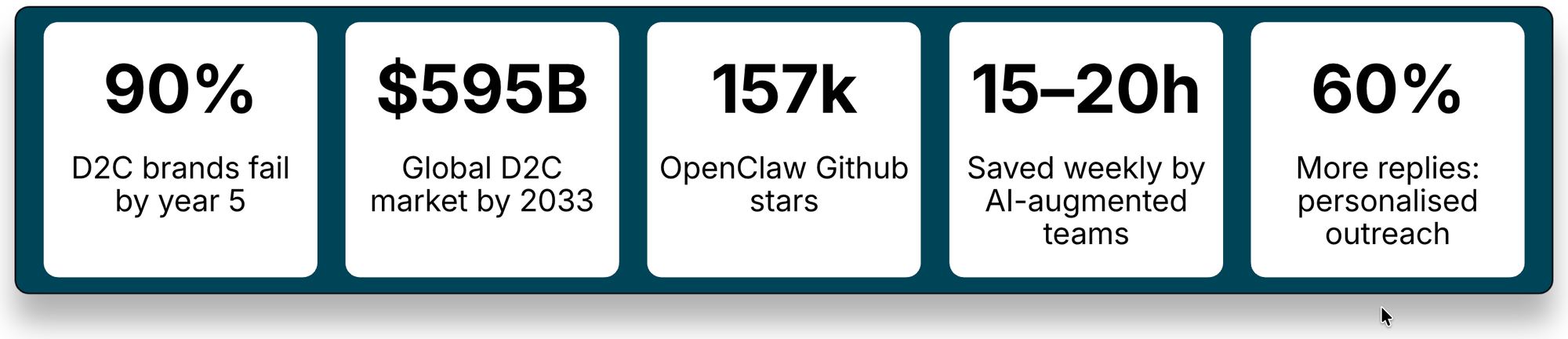
We’ve seen what changes when a lean D2C team gets the right tools. The one generating the most conversation right now is OpenClaw, an open-source AI agent that crossed 157,000 GitHub stars in record time. Unlike a chatbot you open in a browser tab, OpenClaw runs on your own infrastructure, maintains a persistent memory of your brand, connects to your email, calendar, social platforms, CRM, and ad accounts, and executes actions autonomously, 24 hours a day.
"If a brand is not machine-readable in 2026, it is functionally invisible. The brands surviving aren’t working harder. They’re deploying autonomous agents to work 24/7 while the team sleeps."
Across the brands we work with, the ones doing best aren’t necessarily the biggest. They’re just the most efficient. Here are the five ways we recommend every D2C team put OpenClaw to work, right now.
Build a Content Engine That Runs Without You
The most common thing we hear from D2C marketers at Glood: “We know what we should be doing. We can’t produce it all.” TikTok needs vertical video. LinkedIn wants a first-person narrative. Email has its own rhythm. Reddit wants you not to sound like a brand. For a team of three or four, keeping all of that consistent is almost impossible. Something always gets cut.
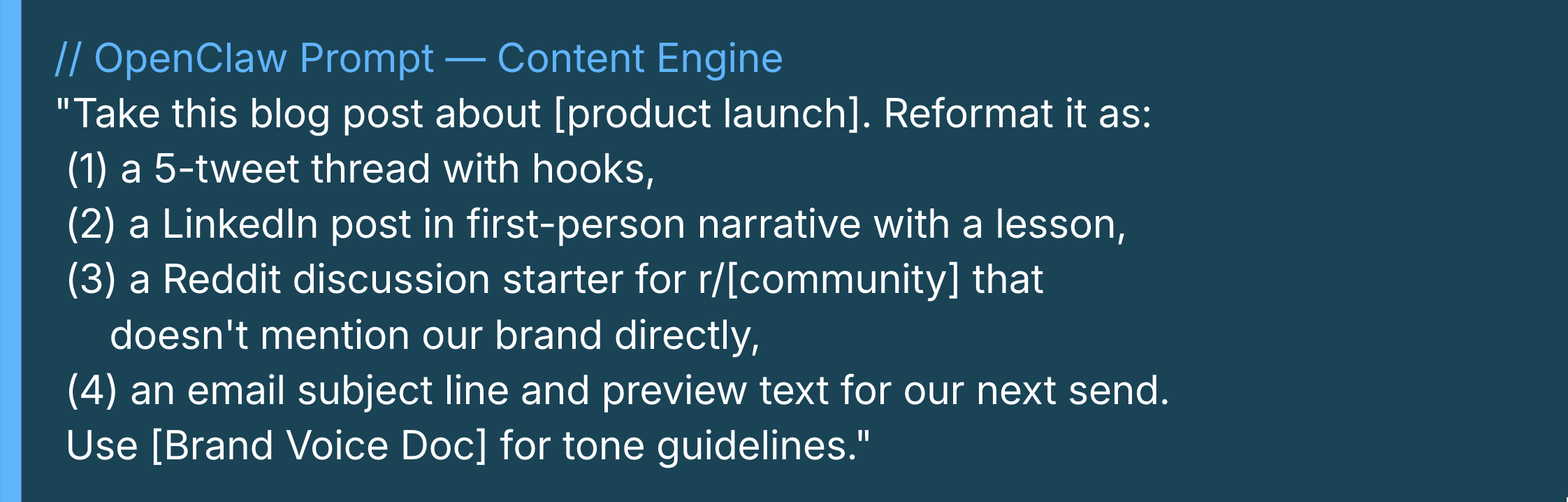
OpenClaw solves this with the COPE model: Create Once, Publish Everywhere. Your team writes one post. OpenClaw autonomously reformats and distributes it across Medium, LinkedIn, Twitter threads, and Reddit discussion starters, with each version platform-specific, SEO-canonical-linked, and voice-matched to your brand. No duplicate content penalties. No generic copy-paste.
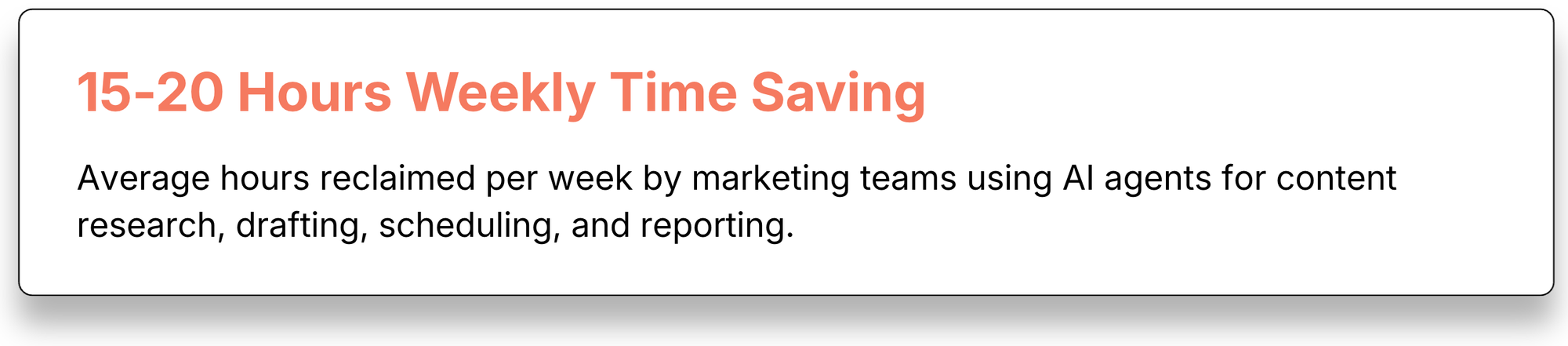
According to research from DigitalApplied.com, marketing teams using AI agents for content research, first-draft generation, and social scheduling reclaim 15–20 hours per week. We see this consistently in the brands on our platform, with time reinvested into strategy, creative direction, and the 20% of decisions that actually move the needle.
In practice, a team of three starts producing what used to take eight people, across every major channel, without the brand drift that creeps into AI-generated content over time. OpenClaw keeps your voice rules, product positioning, and compliance constraints in memory across sessions.
02 Scale Micro-Influencer Outreach to 50 Contacts a Day
The highest-converting influencer campaigns we see don’t come from celebrities with seven-figure followings. They come from micro-influencers—accounts between 10,000 and 50,000 followers—who’ve built real trust with a specific audience. A recommendation from one of them converts better and costs a fraction of a sponsored post from a big name.
The problem has always been scale. Finding micro-influencers manually, scrolling bios, checking engagement ratios, evaluating voice fit, and drafting personalised outreach all take hours per contact. Most teams identify ten or fifteen viable candidates a week. OpenClaw identifies and contacts 50 qualified micro-influencers in a single day, without sacrificing the personalisation that makes outreach work.
Here’s what the workflow looks like: OpenClaw scrapes Twitter and LinkedIn bios for category-relevant keywords and follower counts within the target range. It analyses the candidate’s last 20 posts, including tone, topic distribution, engagement rate, and audience type, then drafts a direct message that references specific recent content they published. Not “Hey, love your content!” More like: “Saw your thread last week on Ad ROAS. That breakdown on attribution was excellent. Would love to connect about something that aligns with that.”
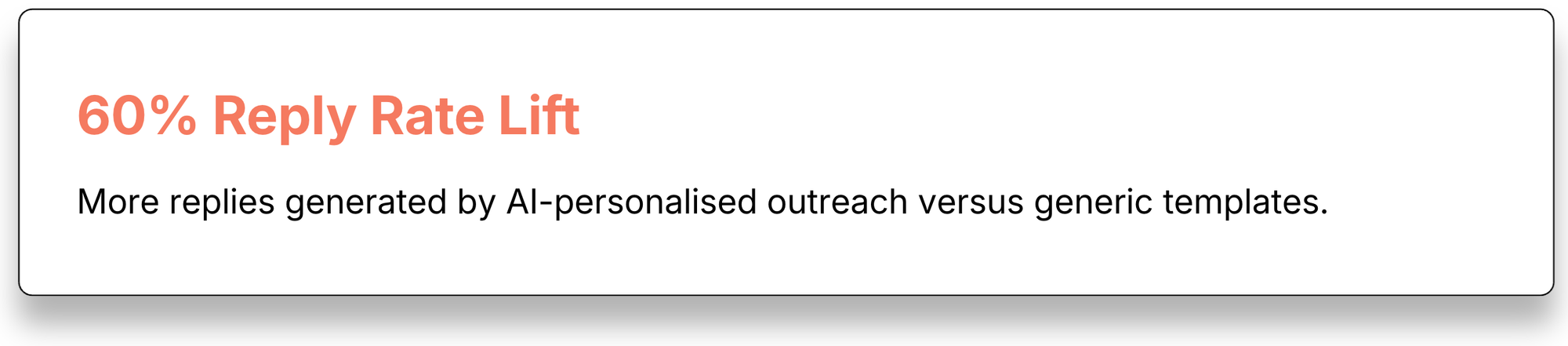
Woodpecker’s 2024 cold email benchmarks show personalised outreach generates 60% more replies than generic templates. OpenClaw delivers that personalisation at 50 contacts per day, without anyone on your team doing the legwork. For a D2C brand, the difference between sending 10 generic DMs a week and 50 tailored ones a day shows up fast in your creator pipeline.
03 Monitor Competitors in Real Time, Not Weekly
One of the most valuable things our AI Agentic Platform does for Shopify brands is move competitive intelligence from a weekly ritual into a live feed. We built that capability because we watched too many brands lose positioning windows they never knew existed. In 2026, a competitor’s price change, new campaign angle, or product launch can alter the market within 48 hours. By the time most teams catch it during their weekly review, the window to respond is already closing.
OpenClaw does the same at the open-source level. Once configured, it monitors competitor websites, Meta and TikTok ad libraries, social media accounts, and press releases on a continuous cron schedule. When something changes, whether a new hero product in the ad library, a pricing shift on a competitor’s product page, or a new collection drop, it fires a Slack or Telegram alert before you’ve finished your morning coffee.
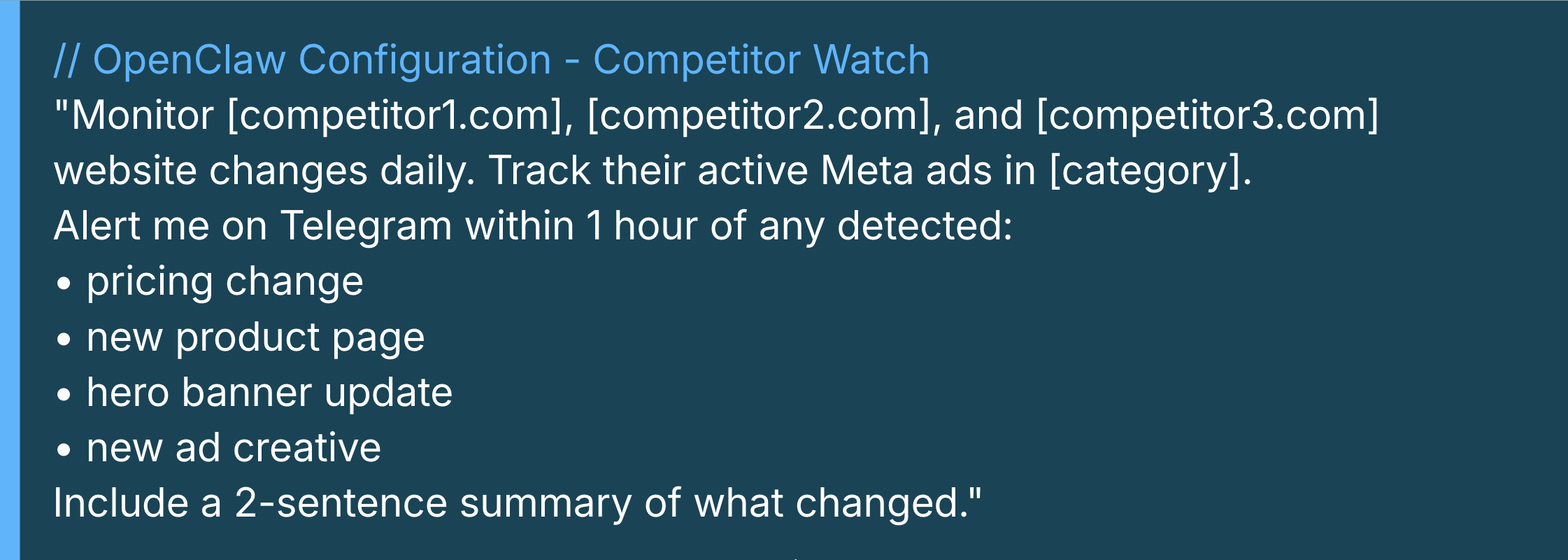
Brands running this for 90 days start catching things they used to miss entirely. When you see a competitor quietly pulling budget from TikTok before they’ve announced anything publicly, you can move first. That’s an information advantage.
04 Replace Manual Reporting With Automated Alerts
Ask any D2C marketing manager what their least favourite task is. The answer is almost always the same: compiling weekly reports. Pulling data from Google Analytics, Google Search Console, Meta Ads Manager, Klaviyo, and the CRM, then formatting it all, calculating week-over-week changes, and flagging anomalies is three hours of mechanical work producing a document most stakeholders skim for thirty seconds.
OpenClaw replaces this entirely. Configure it once and every Monday at 9am a structured performance brief drops into Slack or email, pulling from all data sources simultaneously, surfacing the three things that most need your attention. But the more valuable feature isn’t the scheduled report. It’s the mid-week anomaly alerts.
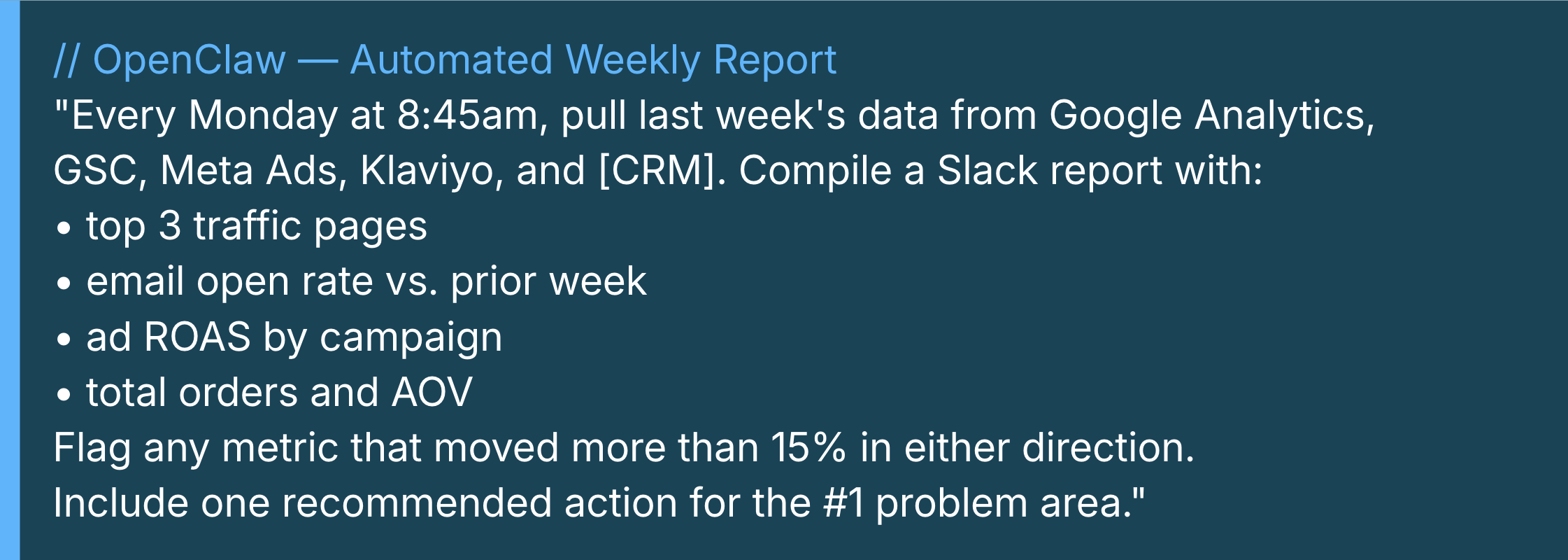
When ROAS drops 20% mid-week (not next Monday, but mid-week), OpenClaw fires an alert. When email click rates spike on a specific segment, you know within hours. When a traffic source starts underperforming, you reallocate budget before you’ve burned half the week’s spend. We built exactly this kind of real-time intelligence layer into Glood’s Ads Management feature because we know: the brands that catch CAC spikes three days earlier than their competitors will systematically outperform over any rolling quarter.
05 Run Overnight SEO Campaigns That Compound Forever
For most D2C brands we speak with, SEO is simultaneously the highest-ROI and most neglected channel. High ROI because organic traffic compounds indefinitely without a CPM attached. Neglected because genuine link-building is brutally labour-intensive. Broken link building, which involves finding high-authority sites that link to dead pages and pitching your content as the replacement, is one of the best-converting outreach strategies in the playbook. And it’s almost universally treated as aspirational because no team has the bandwidth to do it properly.
Every step of the broken link process is mechanical. Every step is exactly what OpenClaw was built to automate.
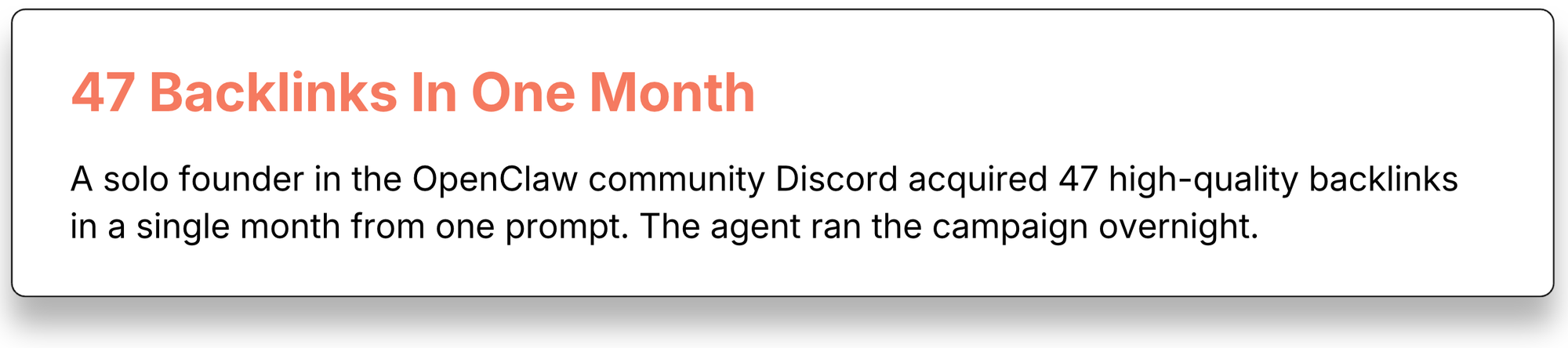
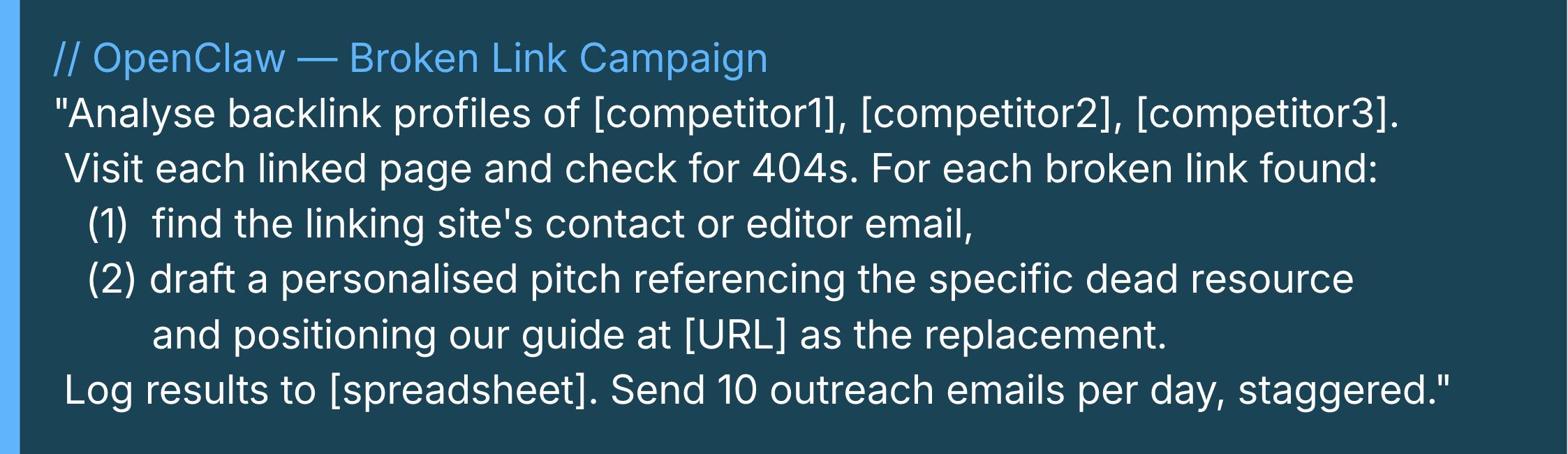
OpenClaw scans competitor backlink profiles, visits every linked page to verify 404 status, finds contact emails, drafts personalised replacement pitches, and sends them in controlled daily batches to avoid spam filters—all from a single prompt configured once. For D2C brands where paid acquisition costs are eating into margins, this is one of the few channels that keeps paying back without a recurring media spend.
What This Looks Like for a Real Brand
Here’s a scenario we’ve seen play out closely: a D2C skincare brand, 15 SKUs, a team of four, $2M ARR, that has been plateauing on paid social because of rising CPAs post-iOS 14. They’re producing two blog posts a month, sending weekly emails, and half-heartedly maintaining an Instagram. Their influencer programme is three ad hoc relationships managed manually.
This brand deploys OpenClaw on a single VPS ($24/month), configured over two days. Within the first 30 days:
- Content volume triples with no additional headcount. Each blog post automatically spawns a LinkedIn piece, a Twitter thread, an email variant, and a Reddit educational post.
- Influencer outreach scales from 5 contacts/week to 50/day with personalised DMs. Active micro-influencer conversations grow from 3 to 31 within the month.
- Competitive monitoring catches a major competitor quietly pulling their hero serum from Meta ads. The brand pivots its own ads to own that positioning before anyone else does.
- A ROAS alert fires on a Thursday afternoon when one campaign drops below threshold. Budget is reallocated to the top performer before the weekend burn.
- An overnight broken link campaign secures 12 new backlinks from beauty editorial sites in the first three weeks.
“An agent helps you create outcomes, not just content. That’s the line between AI-assisted marketing and AI-powered marketing operations. And that line is where the real competitive advantage lives in 2026.” — MarketingAgent.blog
Before You Deploy: Three Things We Always Say First
Start with one workflow. Teams that try to automate everything simultaneously see lower adoption and more failure points. Pick the highest-pain use case, usually content distribution or reporting, and master it for 30 days before expanding. At Glood, we see the most successful rollouts start with a single automated report that saves three hours on Monday morning.
Build your brand memory document first. Before running a single content workflow, write a detailed brand voice doc: tone, vocabulary, avoid-list, positioning statements, audience segments, and compliance constraints. This is what keeps AI-generated content from drifting into generic filler over time.
Keep your team in the creative seat. OpenClaw drafts; your team publishes. For content, influencer DMs, and link-building pitches, build a review checkpoint before anything goes live. The Agent handles research and execution. Your team handles strategy, brand voice, and creative direction. That’s the Expert Co-Pilot model, and it’s exactly how we built Glood.

Sign Up For Our Free Weekly Newsletter
Get the latest e-commerce insights, tips, and strategies delivered straight to your inbox.
You May Also Love to Read

The Growing Popularity of Integrating AI Technology into Existing Dropshipping Platforms
Integrating AI technology into existing dropshipping platforms can enhance various aspects of the business, such as product recommendations, inventory management, and customer service. However, implementing AI technology into dropshipping platforms can come with several challenges and potential draw
Jan 24, 2023
What are the 8 main factors that are important for D2C brands to increase sales in 2023?
D2C brands need to focus on increasing sales by implementing better and lucrative strategies. Offering a personalized touch with enhanced customer value, D2C brands are surpassing competitors to lend an advantage to their esteemed customers.
Jan 23, 2023
Personalization on a Timeline: How Did E-commerce Come to AI-Based Operation?
When did personalization of marketing and sales begin? Contrary to popular belief, personalization has always been around. The only thing that has changed is the way it is processed and presented to the customers. Read this blog to know more!
Oct 10, 2022